
My niece likes drawing little hearts whenever she gets colored pencils, especially on cards, notes, and scraps of paper.
One day, she filled almost an entire page with different heart shapes and kept showing me which one she liked best.
That gave me the idea to turn the simple shape she already enjoyed drawing into a small paper craft she could decorate herself.
It felt like an easy way to make something sweet without needing too many materials or complicated steps.
Let’s make this heart craft.
- Why Hearts Represent Love
- Materials Needed:
- Step-by-Step Guide
- 1. Prepare Pink Paper
- 2. Cut Rounded Base
- 3. Create Accordion Folds
- 4. Shape Paper Heart
- 5. Prepare Heart Decorations
- 6. Assemble Heart Wand
- Why Heart Shapes Are Symmetrical
- How the Heart Symbol Became Popular
- Why the Accordion Fold Works
- FAQs
- Can I Use This Heart Craft as a Gift Tag?
- Can I Turn This Heart Craft Into a Hanging Decoration?
Why Hearts Represent Love
The heart shape has been connected with love and affection for centuries, which is why it appears so often on cards and decorations.
People use hearts to show care for family, friends, and someone special without needing to write a long message.
Its simple shape is also easy to recognize, so even young children quickly understand what the symbol usually represents.
That makes a heart craft especially useful for Valentine’s Day, friendship activities, thank-you cards, or handmade gifts.
Materials Needed:
- Pink craft paper
- Red craft paper
- Black craft paper
- Pencil
- Scissors
- Glue
Step-by-Step Guide
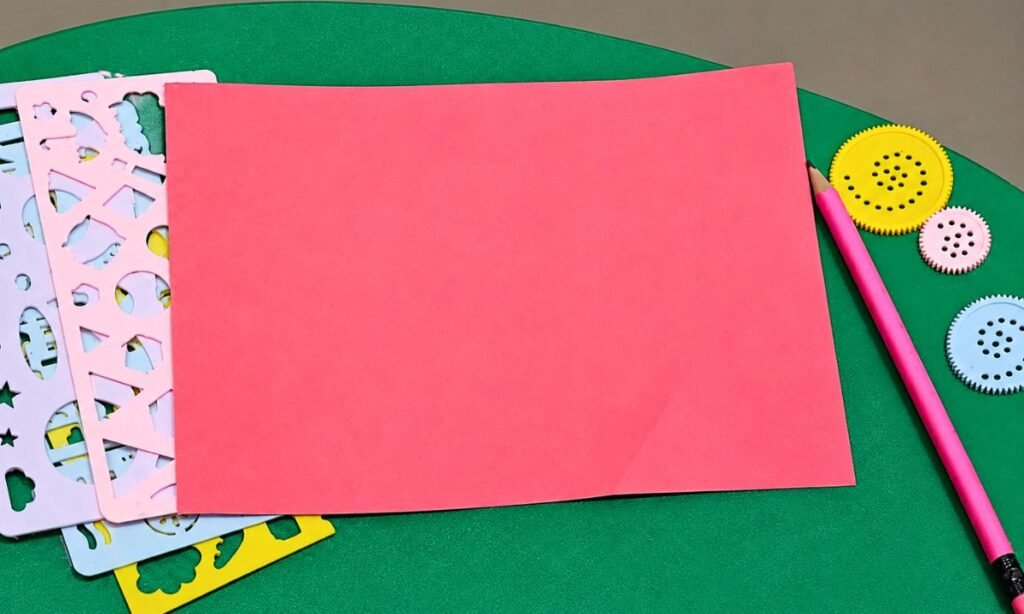
1. Prepare Pink Paper
Choose a bright pink sheet of craft paper and place it flat on your table before starting the heart project.
Use medium-weight paper so the folds hold their shape without becoming too difficult for little hands to manage.
Gather scissors, a pencil, and glue nearby to make the cutting and folding steps easier for kids to follow.
2. Cut Rounded Base
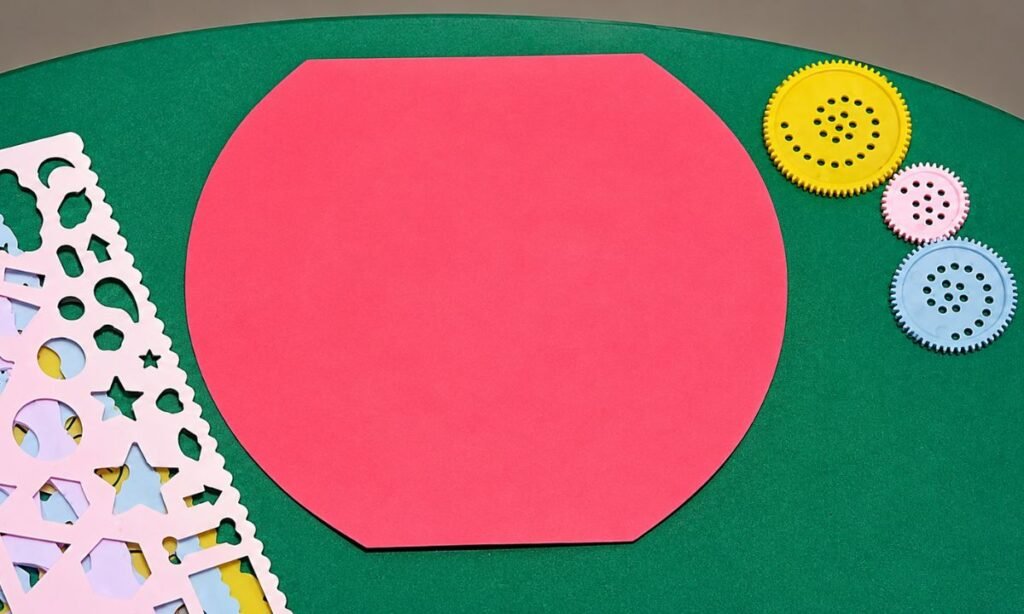
Draw a large rounded shape on the pink paper, leaving straight edges across the top and bottom.
Cut along the curved sides carefully, making both edges as even as possible for a balanced finished heart.
Trim any rough corners before folding, since uneven edges can make the final paper heart look slightly mismatched.
3. Create Accordion Folds
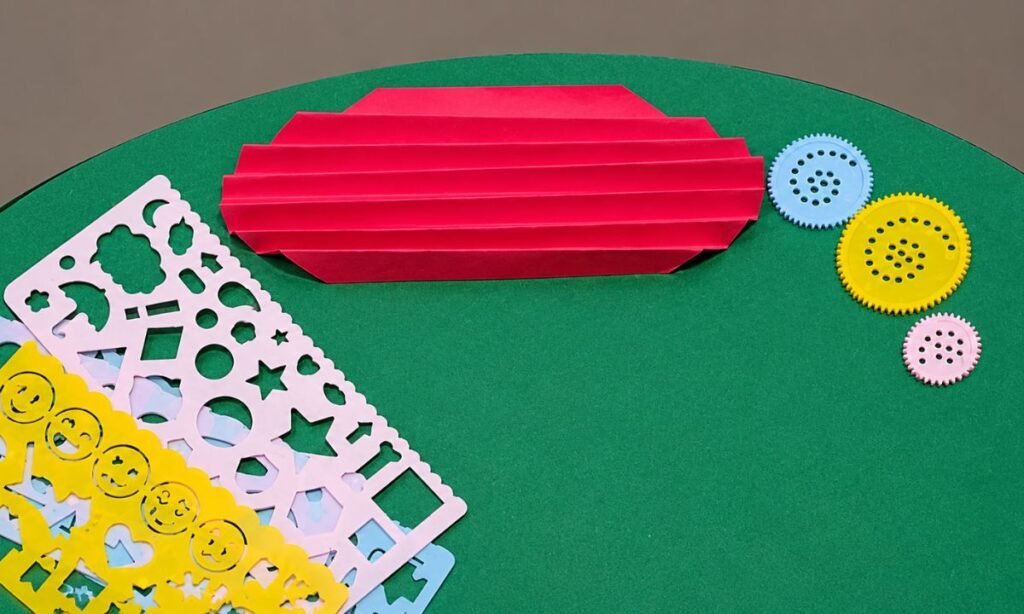
Start folding the pink paper back and forth in narrow strips, creating an accordion pattern across the entire shape.
Press each crease firmly with your fingers so the paper holds its folded structure when you lift it.
Try making every fold the same width, as consistent spacing helps the heart open into a neat fan.
4. Shape Paper Heart
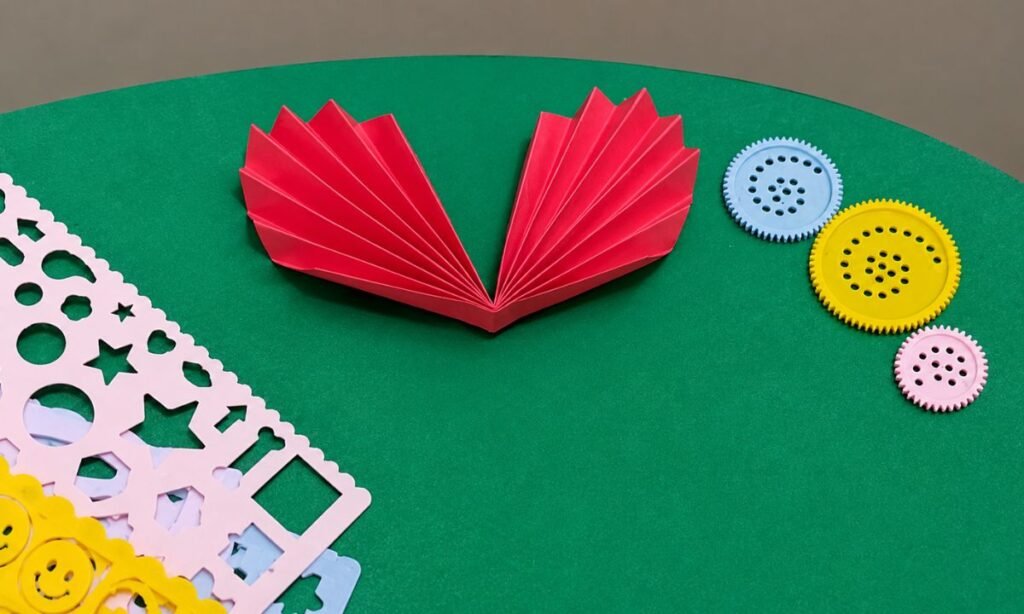
Fold the accordion paper in half and bring the two inner edges together to form the heart’s center.
Secure the touching edges with glue, then gently spread both folded sides outward to create rounded heart lobes.
Let the glue dry before moving on, so the folded heart keeps its shape while you prepare the remaining decorations.
5. Prepare Heart Decorations
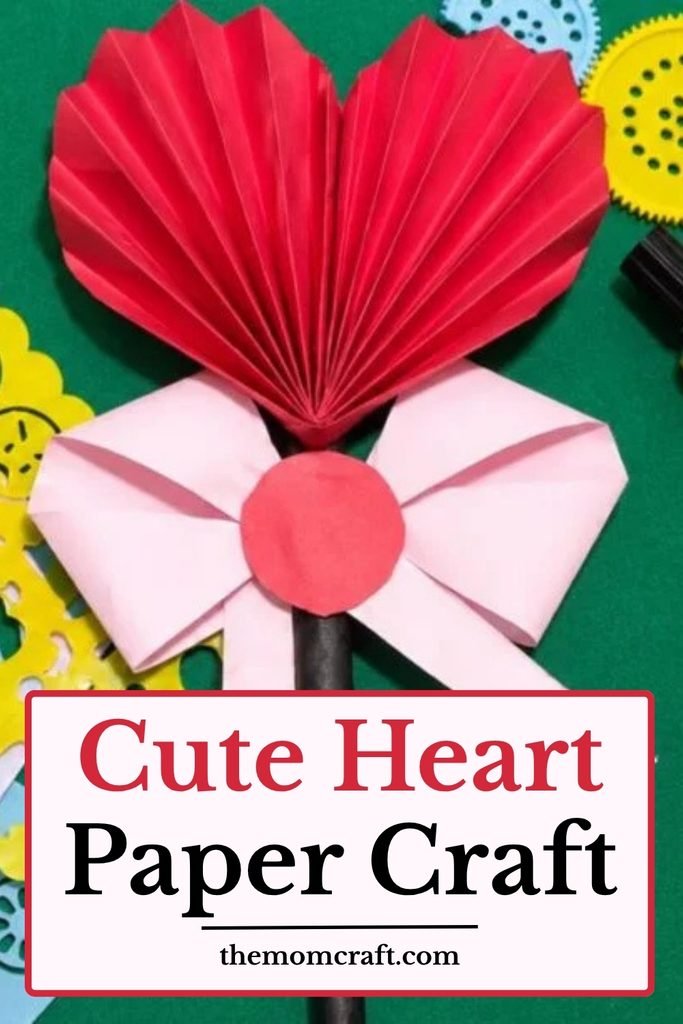
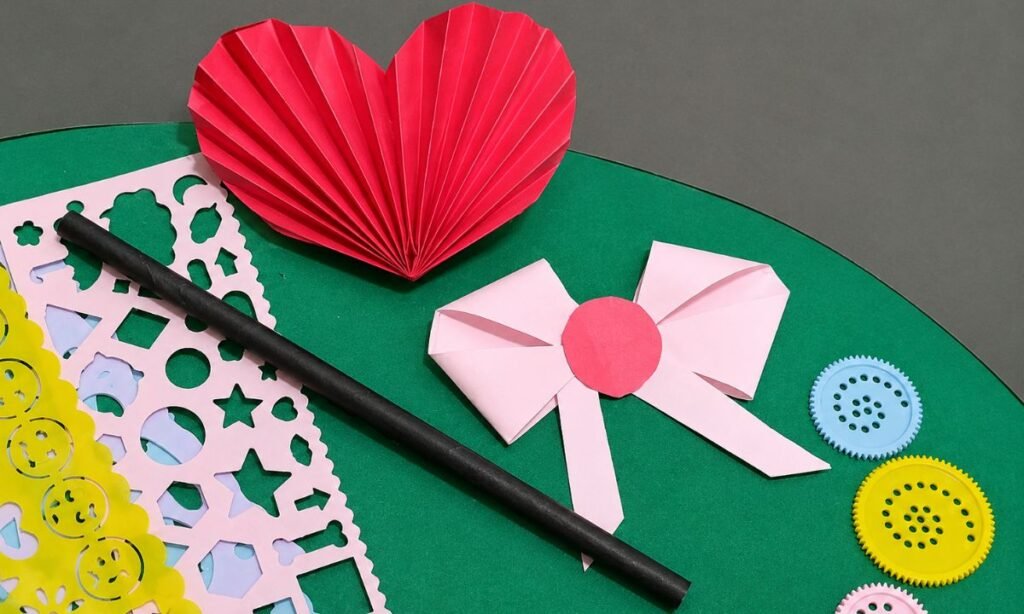
Roll black paper into a long tube for the stem, then cut pink paper into a bow with pointed ribbon ends.
Add a small red circle at the bow’s center, covering the joined edges to give it a neat finish.
Place the folded red heart beside these pieces and check their sizes before attaching everything with glue.
6. Assemble Heart Wand
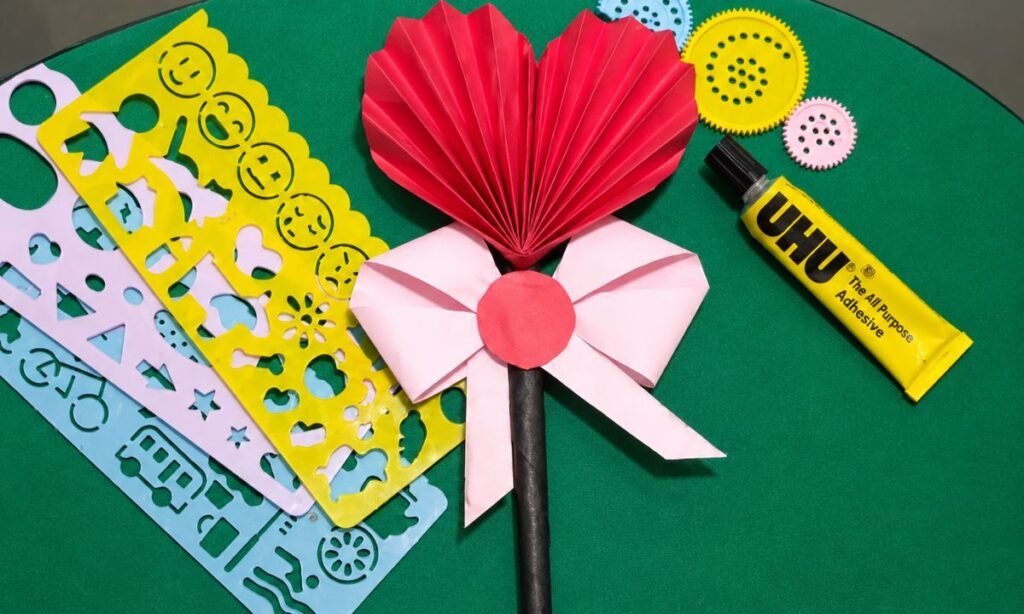
Attach the folded red heart to the top of the black paper tube, securing its pointed bottom with glue.
Position the pink paper bow directly beneath the heart, letting both ribbon tails hang freely along the stem.
Press the glued sections gently and allow them to dry before using your finished heart wand for Valentine’s decorations.
Why Heart Shapes Are Symmetrical
A traditional heart shape has two rounded sides that usually mirror each other, which gives the design its familiar balanced appearance.
When both sides match closely, the center point and upper curves become much easier to recognize as a heart.
This is why folding paper before drawing or cutting is such a useful trick when making heart-shaped crafts.
The fold acts as the center line, helping both halves come out nearly identical when the paper is opened.
How the Heart Symbol Became Popular
The familiar heart symbol has been used for hundreds of years in artwork, books, cards, and decorations connected with affection.
Over time, it became one of the easiest visual symbols for expressing love, friendship, kindness, and care.
Today, heart shapes appear everywhere from greeting cards and jewelry to emojis, clothing, and classroom crafts.
Its simple outline makes it especially useful for crafts because children can recognize the shape without needing realistic details.
Why the Accordion Fold Works
The accordion folds give the flat paper extra shape, helping both sides of the heart spread outward instead of staying completely flat.
Because the folds repeat evenly, they create a fan-like texture that makes the finished heart look fuller and more decorative.
Folding the paper in narrow sections also makes it easier to bend the entire piece neatly through the center.
Once the inner edges are joined, the folds naturally open into two rounded sides and form the recognizable heart shape.
FAQs
Can I Use This Heart Craft as a Gift Tag?
Yes, you can make a smaller version and attach it to a wrapped gift, treat bag, or handmade present.
Write a short name or message on the front, keeping the decoration simple so the words stay easy to read.
A small hole and piece of string can also turn the heart into a hanging tag without changing the main design.
Can I Turn This Heart Craft Into a Hanging Decoration?
Yes, you can attach a loop of string or ribbon to the top and hang the finished heart on a wall or door.
Make several hearts in different sizes if you want to create a small hanging display instead of using only one piece.
Using slightly thicker paper will help the heart hold its shape better when it hangs for a longer time.
You may also like to make!