
I really love parrots and have always wanted to keep one at home because their bright colors and playful nature are so hard to ignore.
The problem is that my schedule stays quite busy, and I know keeping a bird properly would need regular time, attention, and care.
So instead of bringing home a real parrot, I decided to make a colorful paper version that I could still enjoy without the responsibility.
It felt like a simple way to bring a little bit of that parrot charm into my room in a much easier form.
Let’s make this parrot craft.
- Why Parrots Are So Colorful
- Materials Needed:
- Step-by-Step Guide
- 1. Green Hand Outline
- 2. Colorful Hand Cutouts
- 3. Parrot Face Pieces
- 4. Layered Hand Wings
- 5. Yellow Parrot Body
- 6. Colorful Paper Parrot
- Interesting Things About Parrots
- Easy Ways to Customize
- Why Parrots Can Eat Chilies
- FAQs
- Can I Make This Parrot Craft Without Tracing a Hand?
- Can I Add a Perch to This Parrot Craft?
Why Parrots Are So Colorful
Many parrots have bright green, red, blue, yellow, or orange feathers that make them easy to recognize.
Their feather colors come from a mix of pigments and the way light interacts with the tiny structures inside the feathers.
Different parrot species have their own color patterns, so some look mostly green while others have several bold shades together.
Using two or three strong colors in the craft can help capture that bright parrot look without adding too many details.
Materials Needed:
- Green craft paper
- Orange craft paper
- Yellow craft paper
- Red or pink paper
- White and black paper or googly eyes
- Pencil
- Scissor
- Glue
Step-by-Step Guide
1. Green Hand Outline
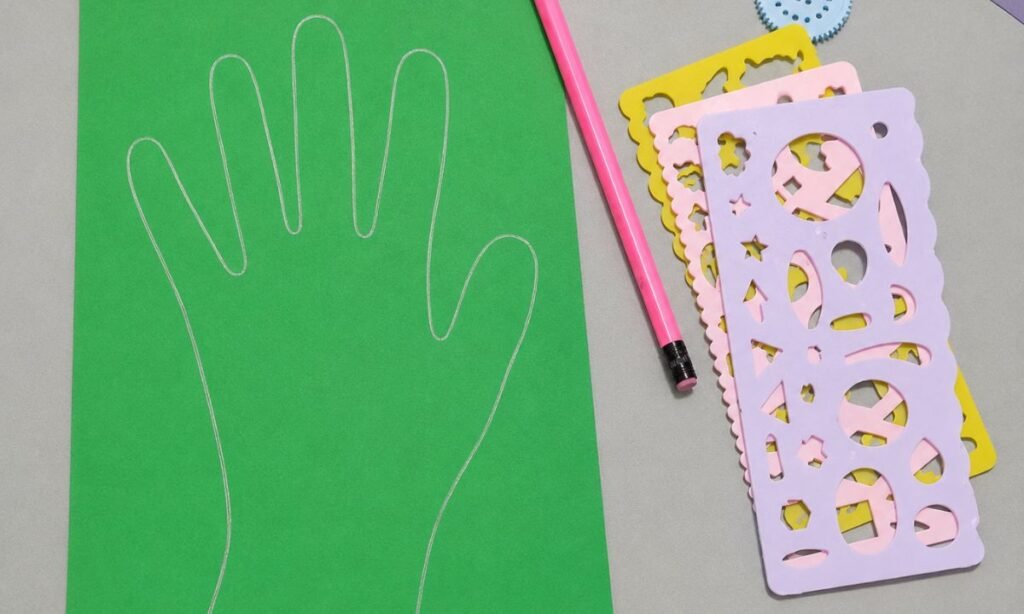
Place your hand flat on green construction paper and trace around each finger carefully using a pencil.
Spread your fingers apart while tracing so every finger has enough space to form separate feather shapes.
Extend the outline below your wrist to create a longer base that can be attached to the parrot craft.
2. Colorful Hand Cutouts
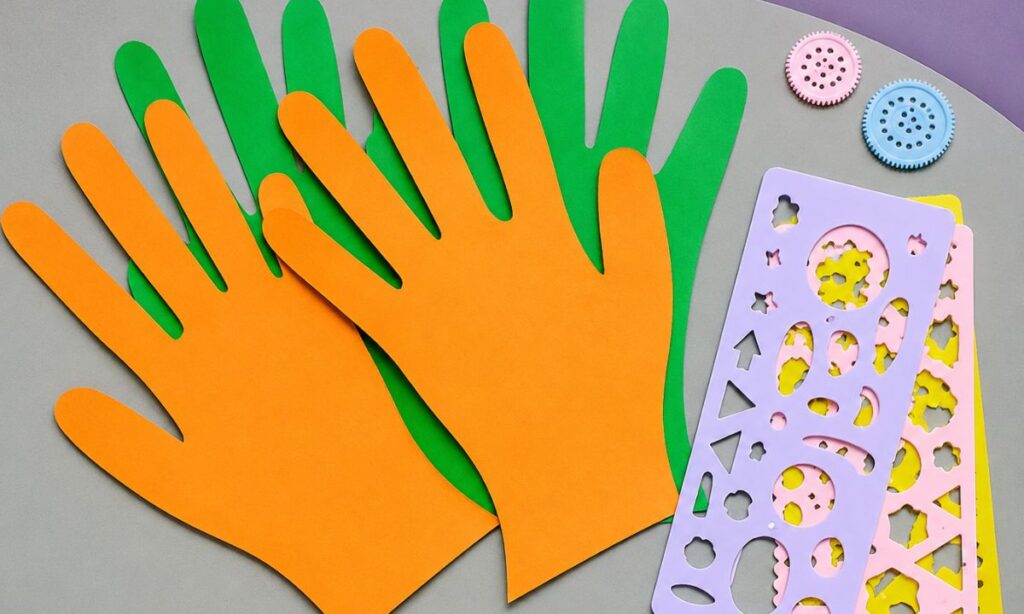
Cut out the traced hand shapes from green and orange construction paper, following the outlines of each finger.
Make two hand cutouts in each color, using smooth cuts around the fingertips to create rounded feather edges.
Arrange the four paper hands together, checking that their fingers remain separate and their palm sections are wide enough.
3. Parrot Face Pieces
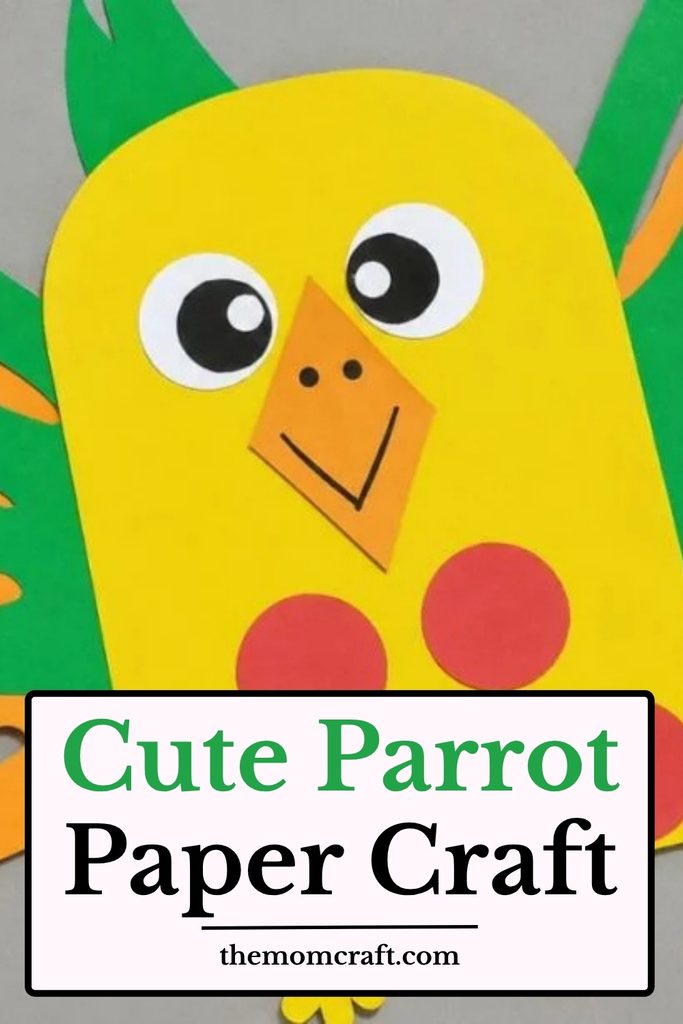
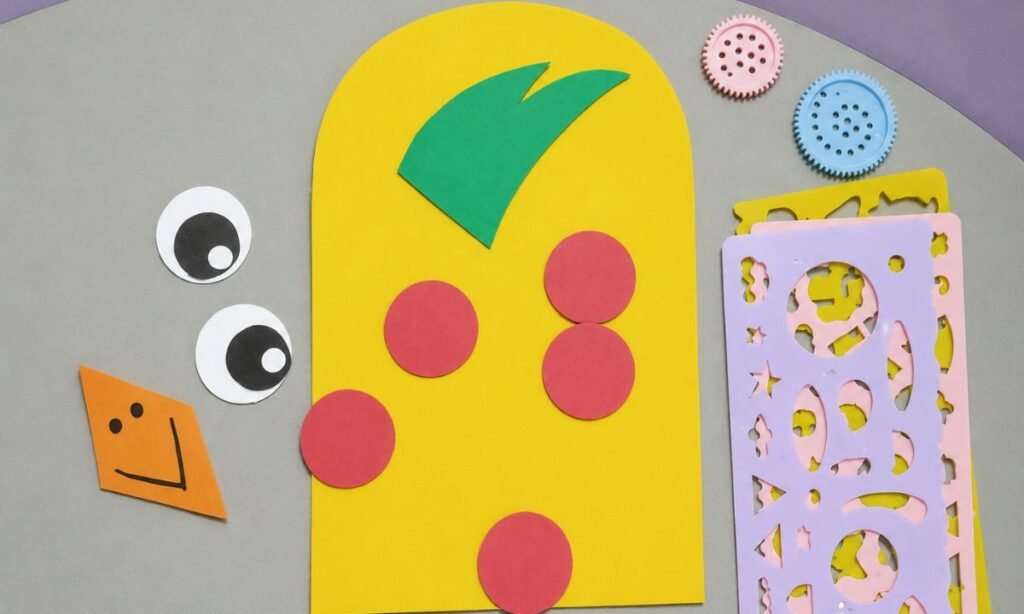
Cut a large rounded shape from yellow paper to create the parrot’s body, leaving the bottom edge straight.
Prepare two round paper eyes, an orange pointed beak, five red circles, and a green feather shape.
Draw black details on the beak and eyes, then arrange the pieces beside the yellow body before gluing.
4. Layered Hand Wings
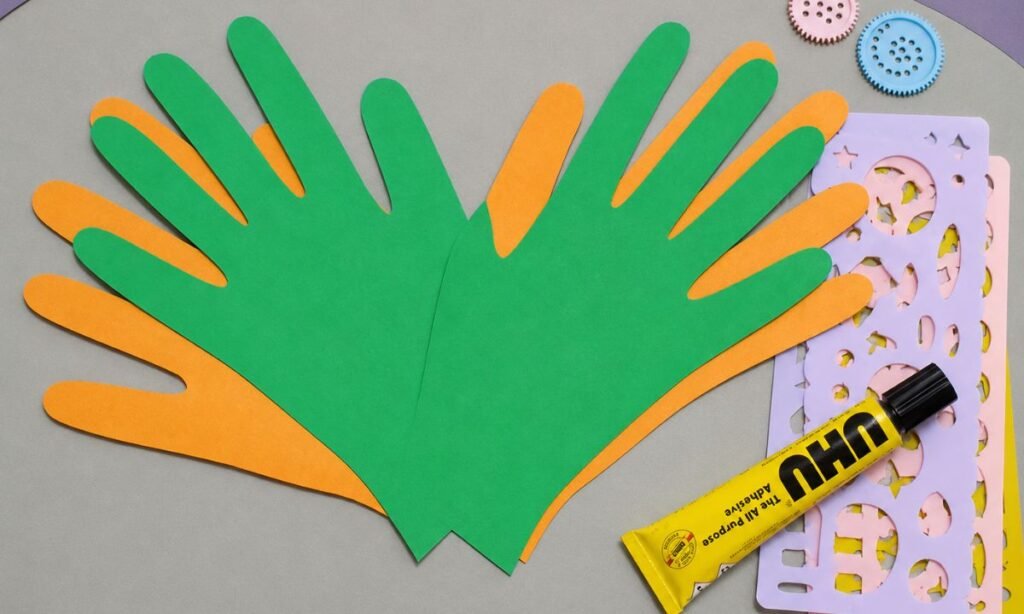
Place the orange hand cutouts underneath the green ones, allowing the orange fingertips to show between the green fingers.
Overlap the palm sections near the bottom while spreading the fingers outward to create two wide parrot wings.
Apply glue between the overlapping paper layers, pressing the centers together without flattening the separate finger feathers.
5. Yellow Parrot Body
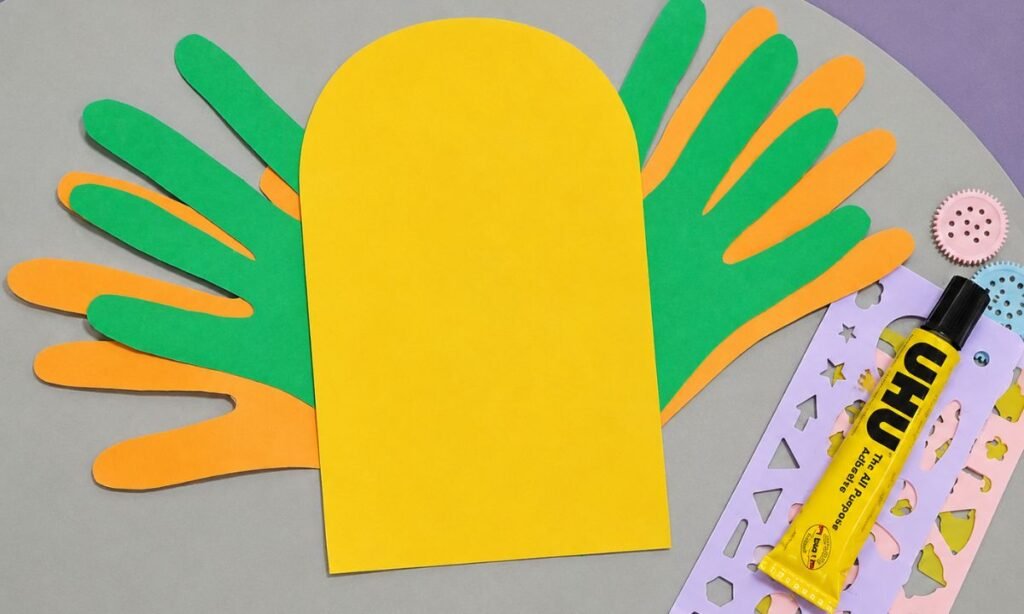
Place the large yellow paper body over the overlapping green and orange hand cutouts to form the parrot’s center.
Position the rounded top above the wings, allowing the colorful paper fingers to extend outward on both sides.
Apply glue behind the yellow body and press it onto the hand cutouts, leaving the feather shapes clearly visible.
6. Colorful Paper Parrot
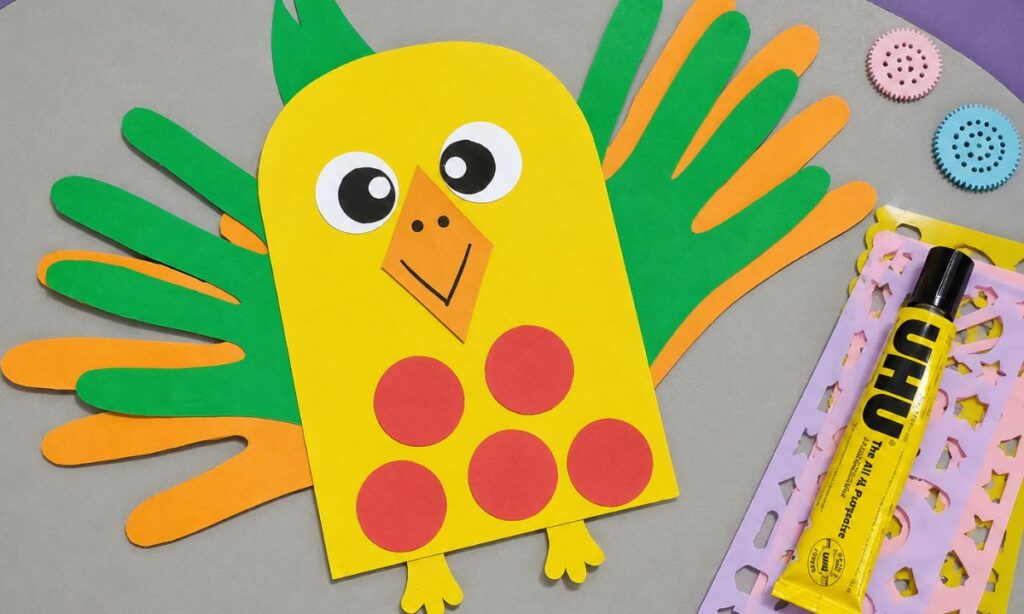
Glue two round paper eyes near the top of the yellow body, leaving enough space between them for the beak.
Attach the orange paper beak below the eyes, then arrange five red circles across the lower body.
Add the green head feathers and two small yellow feet to complete the colorful paper parrot craft.
Interesting Things About Parrots
- Parrots have strong curved beaks that help them crack seeds, hold food, and climb.
- Many parrots use their feet almost like hands when holding fruit, nuts, or other food.
- Some parrot species can live for several decades, so keeping one can be a very long-term responsibility.
- Parrots are found naturally in many warm regions, including parts of South America, Africa, Asia, and Australia.
- Their toes are arranged with two pointing forward and two backward, which gives them a strong grip.
- Some parrots live in large flocks and use calls to stay connected with other birds.
Easy Ways to Customize
Change the feather colors to create a parrot inspired by different species, using green, red, blue, yellow, or mixed shades.
You can add a larger beak, longer tail, wing markings, or small feather details to give the bird a different look.
Try adding a paper branch beneath the feet so the finished parrot looks like it is sitting instead of floating on the page.
A small name tag, speech bubble, or simple background can also make the craft feel more playful and personal.
Why Parrots Can Eat Chilies
Parrots can eat certain fresh chilies because birds do not react to capsaicin, the compound that makes peppers feel hot to humans.
That means many parrots can bite into spicy peppers without experiencing the same burning sensation people usually feel.
Chilies can also provide nutrients such as vitamin C, although they should still be offered as part of a balanced diet.
Fresh, plain peppers are the safer choice, while sauces, seasonings, salt, and heavily processed spicy foods should be avoided.
FAQs
Can I Make This Parrot Craft Without Tracing a Hand?
Yes, you can draw simple feather shapes instead of tracing a hand if you want a more traditional wing design.
Cut several long rounded pieces and layer them behind the body to create the same wide feathered effect.
This option also works well if several children are making the craft and you want all the wings to look similar.
Baaki Interesting Things About Parrots, chili H2, customization, aur intro sab distinct hain.
Can I Add a Perch to This Parrot Craft?
Yes, you can cut a brown paper branch and attach it beneath the parrot so the bird looks like it is sitting.
Keep the branch wide enough to support both feet and place it slightly below the body before gluing everything permanently.
You can also add a few paper leaves around the branch if you want the finished craft to feel more complete.
You may also like to make!