
One night, I was reading a bedtime story to my niece, and one page had a bright orange tiger with bold black stripes.
She kept pointing at the picture and asking about the tiger, especially the stripes running across its face and body.
The next day, she was still talking about that same tiger, which made the story feel like it had stayed with her even after bedtime.
So, I decided to turn that little storybook moment into a tiger craft we could make together during the day.
Let’s make this tiger craft.
- Why Do Tigers Have Stripes?
- Materials Needed:
- Step-By-Step Guide
- 1. Prepare Orange Paper
- 2. Form Paper Cylinder
- 3. Prepare Tiger Pieces
- 4. Add Tiger Stripes
- 5. Attach Tiger Head
- 6. Add Tail and Paws
- Why Tigers Prefer Living Alone
- Why Is the Tiger Called the King of the Jungle?
- FAQs
- Can I Make This Tiger Craft Without a Paper Roll?
- How Can I Make the Tiger Stripes Look Neater?
Why Do Tigers Have Stripes?
Tiger stripes help them blend into tall grass, shadows, and forest plants, making their bodies harder for other animals to notice.
The dark stripes break up the tiger’s orange shape, which helps it stay hidden while moving slowly through its surroundings.
Every tiger has a unique stripe pattern, almost like a fingerprint, so no two tigers look exactly the same.
These stripes are not only on the fur because the skin underneath also carries a similar striped pattern.
Materials Needed:
- Colored paper (yellow, orange, black and white)
- Glue
- Scissors
- Pencil
- Black marker
- Compass (for circles)
Step-By-Step Guide
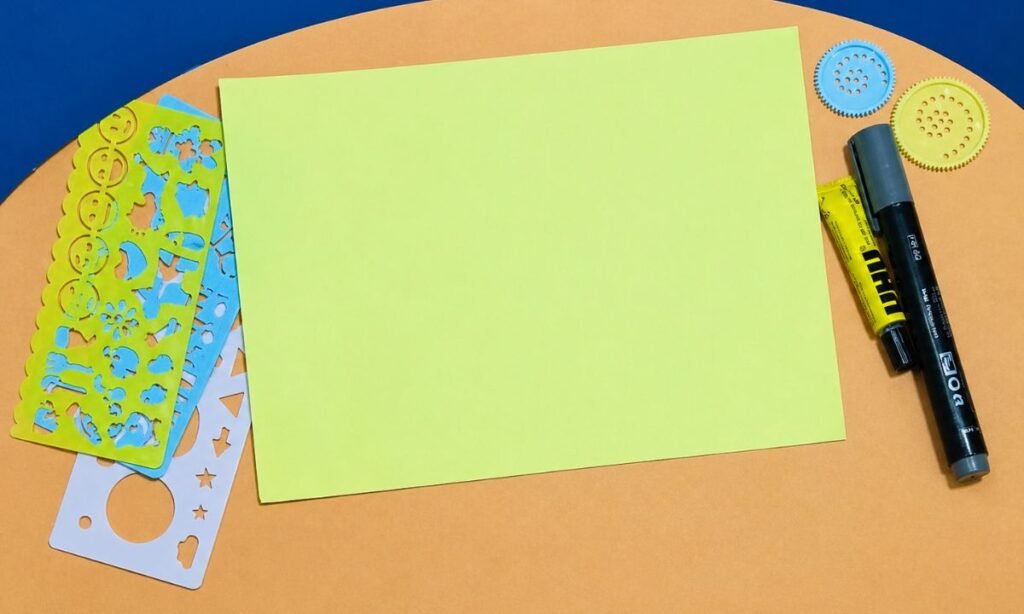
1. Prepare Orange Paper
Place a light orange paper sheet flat on your work surface, keeping the edges straight and the surface smooth before starting.
Choose a clean sheet without folds or wrinkles, because a smooth surface makes drawing and cutting the tiger pieces much easier.
Keep the paper centered in front of you, leaving enough open space around it for tracing, shaping, and cutting comfortably.
2. Form Paper Cylinder
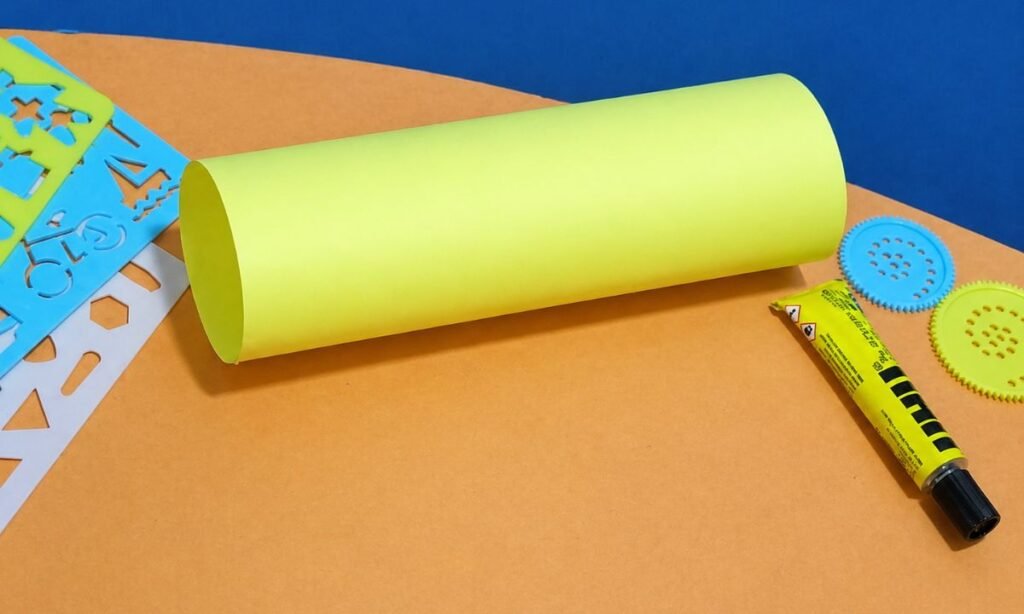
Roll the orange paper into a wide cylinder, bringing the two short edges together until the body forms a smooth tube.
Apply glue along the overlapping edge and press it firmly, keeping the cylinder even so it does not loosen or flatten.
Check both open ends from the side, adjusting the paper gently until the round shape looks balanced and neatly aligned.
3. Prepare Tiger Pieces
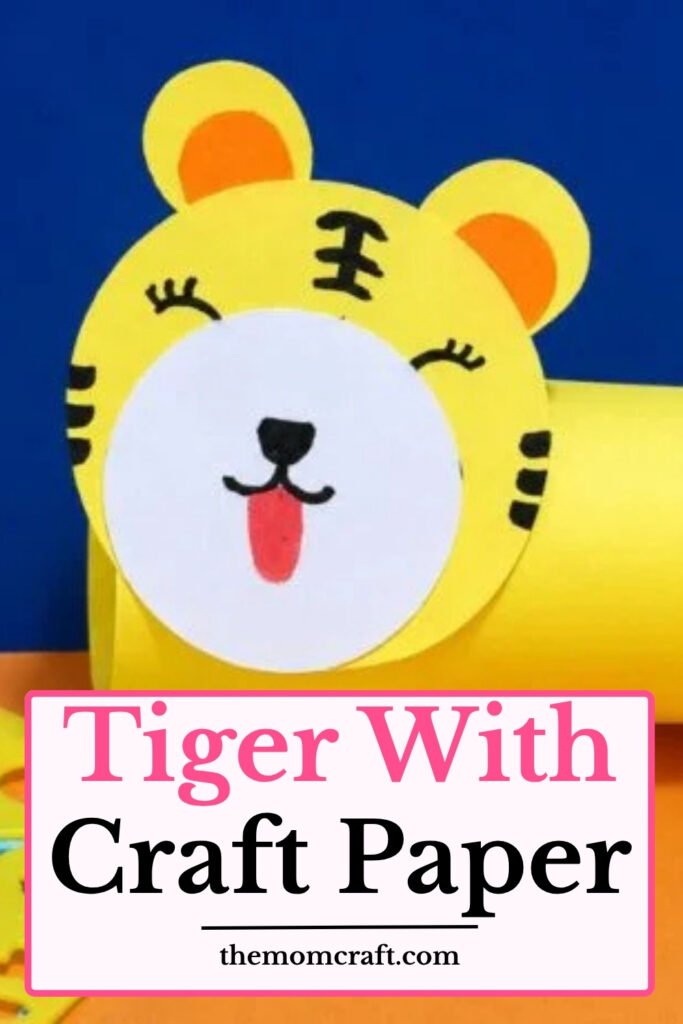
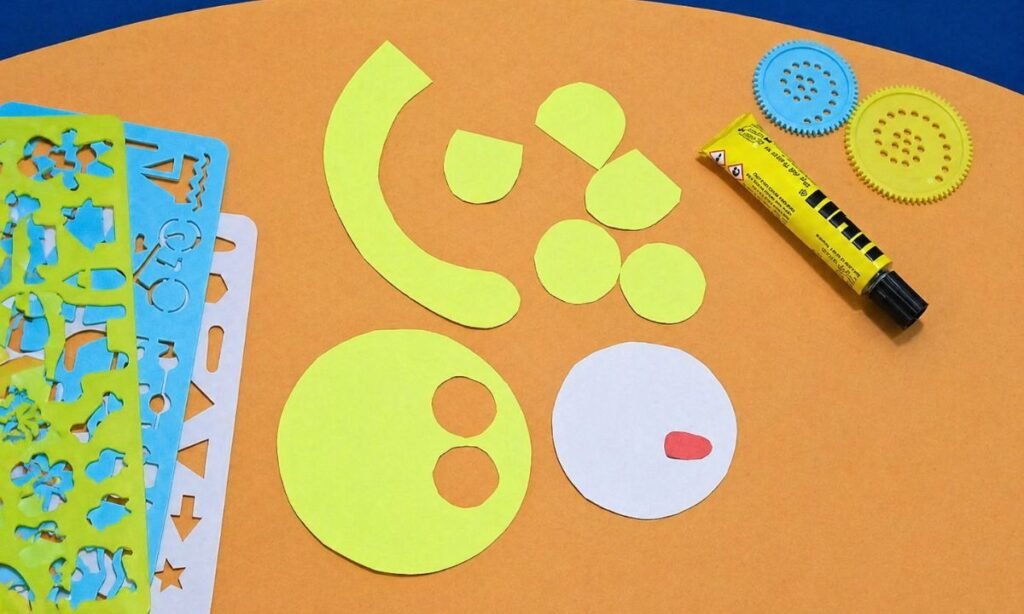
Cut a large orange circle for the face, then prepare smaller rounded pieces for the ears, paws, and other body details.
Cut a curved orange strip for the tail, keeping one end wider so the shape looks natural when attached later.
Prepare a white muzzle circle with a small red nose, making sure each piece stays clean and easy to arrange.
4. Add Tiger Stripes
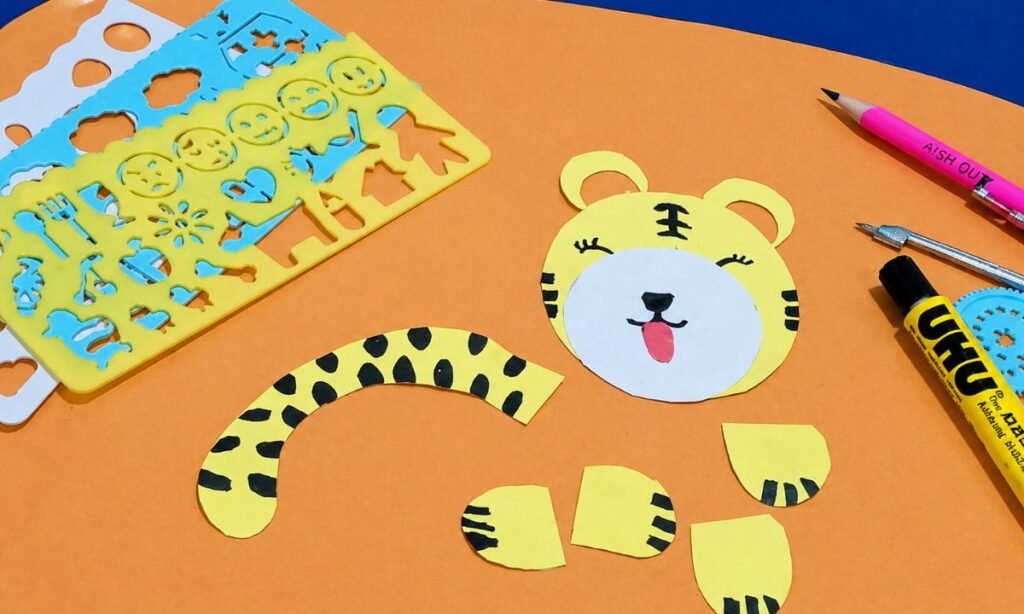
Draw black stripes across the tiger face, tail, and paw pieces, keeping the marks bold and spaced evenly throughout the design.
Add the eyes, nose, mouth, and tongue to the face, making sure each feature stays centered and easy to see.
Check the decorated pieces together before gluing, so the stripe pattern looks consistent across the face, paws, and curved tail.
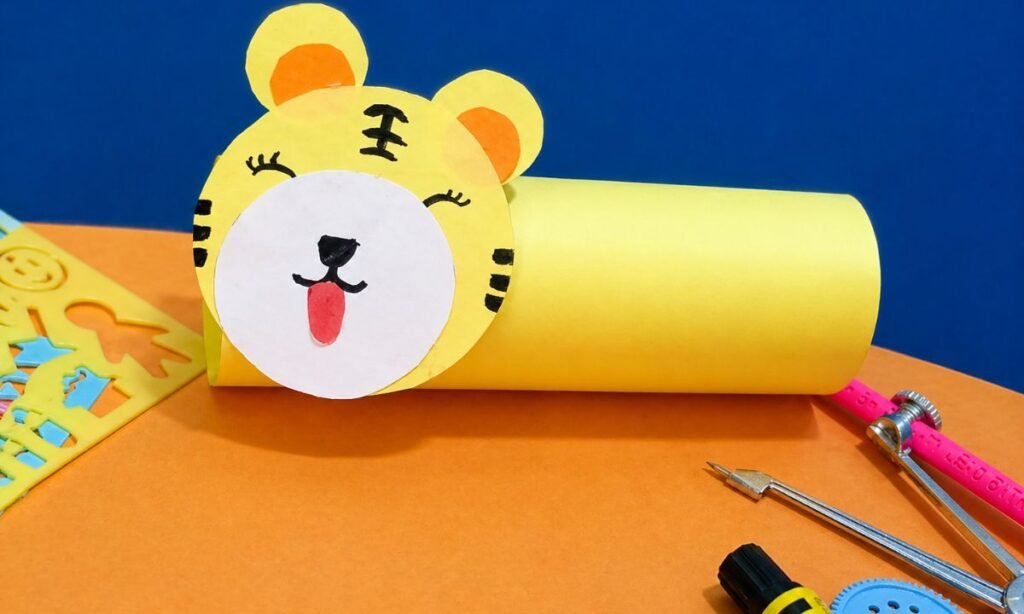
5. Attach Tiger Head
Glue the finished tiger face onto one open end of the paper cylinder, keeping the ears upright and the muzzle centered.
Press the face firmly against the cylinder so the head stays flat without tilting or pulling away from the body.
Check the front view and adjust the placement if needed, making sure the tiger face sits evenly across the cylinder opening.
6. Add Tail and Paws
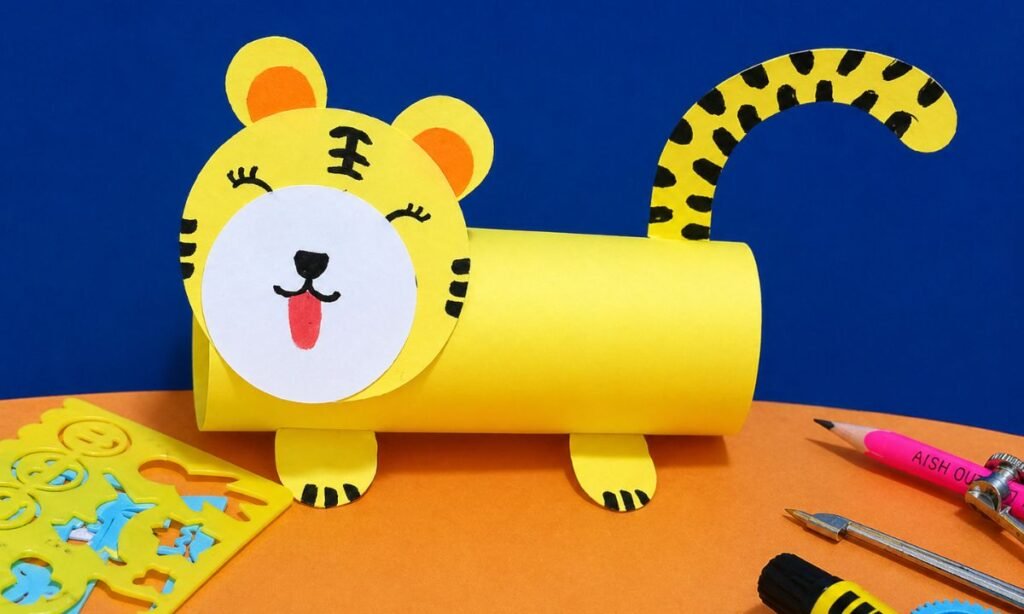
Glue the striped tail to the back of the paper cylinder, curving it upward so the black markings remain clearly visible.
Attach the two decorated paws beneath the cylinder, spacing them apart so the tiger stands evenly on the surface without leaning sideways.
Press each piece firmly after gluing, then check the finished tiger from the front and side to make sure everything looks balanced.
Why Tigers Prefer Living Alone
Tigers usually live and hunt alone because they need large areas with enough food, water, and shelter to survive comfortably.
Living alone also reduces competition, especially when several tigers might otherwise depend on the same prey within one territory.
Adult tigers often mark their territory with scent and scratches, helping other tigers know which areas are already being used.
They usually come together mainly for mating, while mothers stay with their cubs until the young tigers are ready to live independently.
Why Is the Tiger Called the King of the Jungle?
Tigers are often called the king of the jungle because they are powerful predators and usually sit near the top of the food chain.
Their strength, sharp teeth, strong claws, and quiet hunting style make them one of the most respected animals in the wild.
Tigers usually hunt alone and can control large territories, which adds to their image as confident and powerful animals.
Even though lions are more commonly linked with the title “king of the jungle,” tigers are often given a similar reputation because of their strength and presence.
FAQs
Can I Make This Tiger Craft Without a Paper Roll?
Yes, you can make a flat version by using a rectangular paper body instead of rolling the sheet into a cylinder.
Attach the face, paws, and tail directly to the flat body, keeping the same stripe pattern and facial details.
This version works well for wall displays or cards, especially when you want the craft to stay completely flat.
How Can I Make the Tiger Stripes Look Neater?
Use a black marker with a medium tip so the stripes stay bold without becoming too thick or uneven.
Draw the stripes after cutting the pieces, because smaller shapes are easier to decorate once their final edges are visible.
Keep the stripe direction similar on the face, paws, and tail so the finished tiger looks more consistent and balanced.
You may also like to make!